
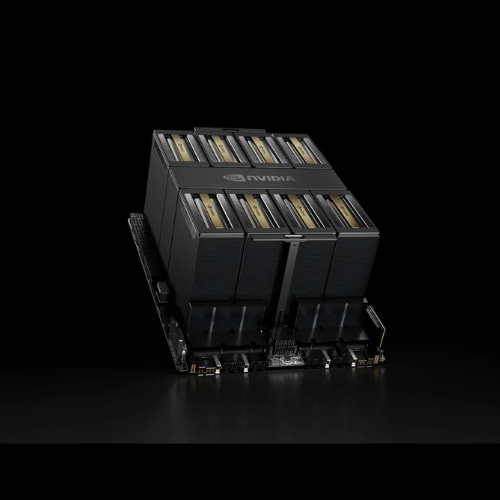
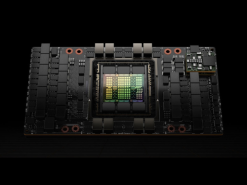
NVIDIA HGX B200 – 8 GPU Blackwell SXM
Contact
- GPU: 8 GPU Blackwell SXM.
- NVLink: NVLink 5.0.
NVIDIA HGX B200 is revolutionizing accelerated computing by unlocking unprecedented performance and energy efficiency. This post shows how HGX B200 is outperforming its predecessor NVIDIA HGX H100 in environmental metrics, including reduced carbon intensity, through a comparison of their recently published product carbon footprint (PCF) summaries.
Specifically, an analysis of the PCF data reveals that HGX B200 shows a 24% reduction of embodied carbon emissions across large workloads such as AI training and inference.
HGX B200 and HGX H100 are accelerated computing platforms composed of eight GPUs each, with high-speed interconnects through NVIDIA NVLink and NVIDIA NVSwitch to accelerate AI performance at scale. Both are designed for high-performance computing (HPC) and supporting data analytics workloads.
How does NVIDIA HGX B200 reduce carbon emissions?
NVIDIA HGX B200 relies on upgraded NVIDIA Blackwell B200 GPUs, which are designed to offer dramatically improved AI performance. B200 GPUs incorporate 180 GB of HBM3E memory—more than double the memory of the NVIDIA HGX H100 and other performance enhancing features, including a second-generation Transformer Engine that introduces FP4 alongside FP8, fifth‑generation NVLink/NVSwitch (up to 1.8 TB/s per‑GPU and 14.4 TB/s aggregate bandwidth), to boost higher throughput at lower precision.
Throughput of the HGX B200 is 2.3x faster (FP16) than the HGX H100. This upgraded compute performance is also more energy efficient. For AI inference, the HGX B200 can be as much as 15x more energy efficient. That’s a 93% reduction in energy for the same inference workload.
HGX B200 also generates less manufacturing-related emissions per FLOPS of compute. Specifically, the embodied carbon intensity for computing is reduced from 0.66 gCO2e per exaflop with HGX H100 to 0.50 gCO2e per exaflop with HGX B200 (estimated based on FP16 precision). This is an overall 24% decrease between the two generations. This is estimated based on PCF data and the total number of FLOPS at FP16 precision executed over the lifetime of the product.
Be the first to review “NVIDIA HGX B200 – 8 GPU Blackwell SXM”
Related products
Reviews
There are no reviews yet.